
According to many studies, more than 50 percent of the U.S. parents reported that they have had little outside childcare mostly during this coronavirus pandemic.

This was alongside the closure of several schools and child care centers across the nation. The decision by some district schools to resort to “virtual learning only” comes at significant expense and concerns for parents. Also, child care providers across the nation are tirelessly engaged in activities to create more safe spaces and care scenarios for children.

Things Changed Quickly
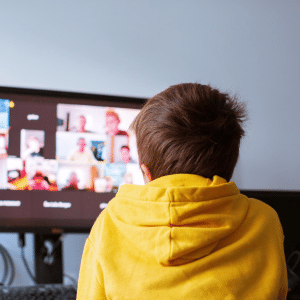
The pandemic has had grave consequences and our businesses have had to switch to virtual working following the stipulated protocols. Because in corporate life people needed to communicate and collaborate with different departments and executives, Zoom came in handy to prevent unnecessary travels and promote work-efficiency.

For many, working virtually through screen sharing applications, audio and video conferencing was difficult in the beginning. Imagine the amazing experience of having the ability to communicate with colleagues at your own convenience, at minimal cost – if any – while maintaining timeliness.

School schedules are difficult, but solutions need to be smooth. Care centers currently run under their own pandemic protocols for the children, mostly at a crippling expense. It is essential to prepare for online learning in case your school closes or becomes exposed to COVID-19.

Remote learning was a required alternative for schools in the USA because the communities were devastated by coronavirus quarantine. Another reasonable alternative for schools for older children is a mix of live Zoom lessons, streaming images, and virtual assignments.

School Systems Adjustments Towards Virtual Lessons

A combination of online and face-to-face learning is expected to be initiated in schools. This would either be by replacing classrooms with virtual lessons or encouraging students to undertake “in-person” lessons for some months at home.

Several public school systems plan to begin the virtual learning or meetings to stand in the place of a normal learning process. Parents could prefer to make their kids also do distance learning in school districts with virtual meetings instead of going into a school this year.

Legislators and administrators and those who deal with them require timely information on COVID-19’s effects on public education programs and legislative strategies to resolve the problem.

Many school districts are committed to implementing the required systems that would support virtual sessions on their premises. This would allow individual parents, learners, and teachers to easily access the students’ process. Administrators have vouched for the virtual meetings as essential to the learning experience amid concerns from different aspects relative to such undertakings.

Daycares Are ‘In Crisis.’

The diverse demands for childcare emerge after childcare centers are limited to meet the requirements of social distancing. A survey conducted in July by the National Youth Education Association (NAEYC) revealed that 40 percent of US childcare centers in the United States said that they were confident that they would be closed down indefinitely without additional public support.

The research also indicates that 86 percent of open childcare centers serve fewer children than before the pandemic, with the average registration decreasing by 67%.

  • A decrease in daycare registration signifies the crisis that this sector is suffering. When a daycare cannot offer its intended services, the crisis escalates.
  • The regulations that advocate for the need for social distancing have proved to be significant within the community. These protocols have worked to create problems and challenges for virtual learning.

Throughout the world, teachers experiment with tasks that parents are able to do at their own pace with their young children. Many want to bond with their children’s live Zoom lessons and want much more to do at home to fill their children’s day.

Teachers would still like to stay in contact with the learners and live connections are important so that they are not too distant. Virtual meetings would then be crucial for the parents to consider.

Parental Concerns Over Virtual Lessons And Meetings Owing To Distractions And Effectiveness

The objective of daycare and pre-schools is questioned from the perspective of virtual classrooms. Parents pay for instructional resources and programs and caregivers to look after their children as they work. Quarantines have rendered this difficult as childcare.

Parents worry about the costs associated with these daycare and preschool classes. In addition to their worries, Zoom calls easily become less effective when pre-school children miss friends, neglect the guidance of the teacher, and eventually become distracted, while parents attempt to corral them to interact.

Virtual learning could also be a critical burden for parents who are making conference calls and aim to optimize their professional performance. Parents of young children who aren’t yet able to use computers or sophisticated technologies or even sit down for more than a couple of minutes are particularly concerned with virtual classrooms.

They also have a growing concern over the effectiveness of this approach towards their children’s curriculum and career goals. Most parents argue that technology affects their children negatively at times.

Costly Childcare In Relation To Virtual Meetings

Many households face financial challenges. Childcare services across the United States are still expensive, especially for struggling parents to afford them. Over the pandemic period, the costs have further risen in childcare centers.

According to the COVID-19 Child Care Study of Care.com, 52 percent of the parents expect childcare to be more than before and 47 percent are more worried about the cost of childcare than previously. Childcare is more costly than it was and this has further scared parents into supporting virtual classrooms.

The Insecurity Associated With Virtual Lectures And Meetings

During this corona virus epidemic, several school districts across the world have begun to restrict the application of Zoom for online learning from homes. This is due to the increasing security concerns and the usefulness of teleconferencing tools by parents and other entities.

FBI warns of the “hacking and breach of privacy that could be related to online classrooms and teleconferences”. Some parents agree that disabling Zoom access could help protect against hacking instances that could harm either teachers or students.

  • Teleconferencing and online learning are valuable for children.
  • However, it comes at a great cost to parents and guardians.

Virtual Meetings And Lectures Could Be Another Burden For Parents

Parents working on a full-time basis can work at home during this corona virus quarantine. They believe that virtual learning has crucial benefits for their children, especially in this pandemic period.

However, parents could have further trouble providing childcare if they lack employment amid costly childcare which may vary between $12,000 to $16,000 annually. Some parents consider that most early childhood educators are not capable of teaching or using digital meetings for online lessons to handle classroom skills. This, to them, is an extra burden.

Read next: Digital Tools For Remote Therapy

Affiliate marketing is nowadays a very digital form of business. Has Covid-19 had impacts on this very digital business?

Digital entrepreneurship is a new form of entrepreneurship that makes it possible for people to work remotely from anywhere in the world with clients from anywhere in the world. In this article we will shortly describe how Covid-19 changed the conditions in digital entrepreneurship in the field of affiliate marketing.

A digital marketing company X is being used as a case example. Digital entrepreneurship is discussed here shortly too, separately from the impacts of Covid-19.

Company X focuses on affiliate marketing both with client projects and own. It has one bigger client and two smaller ones. 80 percent of the time goes with the biggest client and 20 percent is reserved for the two others.

All these companies the company has had close relationships with for almost four years now. The company has only one employee who is currently working as a consultant for search engine optimization (SEO) and content management, closely with people from all over Europe.

Ever since the company was started (2018), the entire business has been completely digital. The services the company owner as a consultant offers are all related to affiliate marketing.

The services include content creation, content management and search engine optimization, both off-page and on-page.

Shortly On Digital Entrepreneurship

Digital entrepreneurship is a form of entrepreneurship that includes entrepreneurial pursuits that are occurring on digital platforms and IT. Digital entrepreneurs are expanding the traditional ways of working since participants are evolving constantly and the markets and work spaces are very diverse with a lot of digital opportunities. (Hattingh et al 2020)

Digital entrepreneurship has made it possible for freelancers in the field of digital marketing to start working remotely from anywhere in the world. Even before Covid-19 it was possible to start a business in one country, for instance in Finland, and be working full-time for marketing agencies all over Europe.

How to Succeed As a Digital Entrepreneur

To succeed as a digital entrepreneur, be it before the Covid-19 or now after, there are certain characteristics one needs. For having a digital entrepreneurial mindset an entrepreneur needs to be able to evaluate, discover and exploit opportunities and at the same time be adopting to digital technologies.

In today’s world these are needed even when the business is not mainly digital, but a digital entrepreneur needs to adapt to these quicker than regular entrepreneurs. (Soltanifar et al 2020, 7)

In company X’s case the key for the success in a digital environment has been high work ethics and the ability to learn new things very quickly. The company owner is very interested in technical search engine optimization and wants to learn more constantly.

The owner follows the industry news and blogs and is connected with SEO professionals around the world in LinkedIn. The owner also has very experienced SEO colleagues in the client companies.

The curiosity and passion for content creation, content management and search engine optimization are something that the clients value. In addition, the owner has a BBA in international business, marketing, which supports here performance.

The fact that the owner learns more constantly and is following what is happening in this very digital industry of affiliate marketing, makes the company as whole a more reliable partner than many other freelancers that could be seen as the company’s direct competitors.

Affiliate Marketing – A Challenging Business In Digital Environment

The process of earning commissions every time one promotes a certain company’s services or products and drives a sale, is called affiliate marketing. One example of a site that could be used for it is explantit.com. It is similar to a commission-only sales representative: the affiliate marketer gets paid only when a sale is made.

On the other hand there are exceptions to this since some companies are ready to pay also for instance for a loan application, which itself does not necessarily lead to a sale yet.

All the client companies of company X are working around affiliate marketing and all of the company X’s own projects are affiliate sites, too. The entire business environment is digital. The company owner does not go to face-to-face meetings but instead can join affiliate programs online. The company is also contacted on LinkedIn for new deals both for its own and its client’s affiliate sites.

The clients the company X works with have never seen each other face-to-face but instead they are using different digital collaboration tools for communicating. This has not changed with Covid-19: this was actually how things were done already before the pandemic.

Tools Used As A Digital Entrepreneur

Company X needs to use various digital collaboration tools for communication and project management. Some client companies are using tools such as Slack and Asana, others rely simply on Skype and Google Drive. Over the 4 years of working as a digital entrepreneur the owner has learned to adapt very quickly to new tools and has increased IT skills significantly. The company owner has even learned some coding, mainly HTML.

Other tools that digital entrepreneurs typically need are related to banking and accounting. In Finland a very popular tool for accounting is Netvisor, which company X is also using. In today’s digital economy it’s possible to open a business account for various platforms.

One does not need to use a traditional bank account, not even in Finland where the trust for national banks is usually very high. Many entrepreneurs are choosing services such as PayPal business accounts.

Changes After Covid-19

Covid-19 has had impacts for many workers around the world in various fields. Self-imposed isolation, lock downs and quarantines have forced people to work remotely. Covid-19 has broken technological and cultural barriers that were earlier preventing working remotely. Now, with the experience of being forced to work remotely, the benefits and also limitations that remote work has are more clear to organizations across the world. (Lund et al 2020)

As said, Covid-19 had massive impacts on remote work in many fields. This was seen also in the field of digital marketing. In company X’s case for instance, the pandemic had only positive effects on the working conditions. Now it was possible to get to higher positions with better salaries and benefits than it was before. Affiliate marketing companies understood that working remotely was as effective, if not more effective than the traditional way.

Earlier company X was producing SEO-friendly content for client companies, but content management and SEO-related tasks were assigned to people working in the client company’s head office. The digital marketing companies X was working with, at that time, thought that it wasn’t possible to have  for instance a Country Manager or an SEO Manager, working remotely when the rest of the team was at the office in another country. Covid-19 changed this way of thinking significantly.

Now the digital marketing companies were forced to work remotely, managers included. Companies quickly discovered that managerial positions can be handled from abroad also. This way company X was soon offered more demanding positions.

Covid-19 forced all kinds of companies to change the way they see remote work. Even though one might think that this had no impact on a business that is very digital, such as affiliate marketing, there were changes, and in company X’s case, only positive ones.

When digital affiliate marketing companies noticed that even the more demanding positions could be done completely remotely, things for digital entrepreneurs working as freelancers changed dramatically. The positions that were earlier impossible to get because one didn’t live in the same country as the client company, were now open for freelancers working remotely from anywhere in the world.

References

Hattingh, M., Matthee, M., Smuts H., Pappas, I, Dwivedi, Y.K., Mäntymäki, M. 6 March 2020. The Characteristics of Digital Entrepreneurship and Digital Transformation: A Systematic Literature Review. Accessed 3 December 2021.https://www.ncbi.nlm.nih.gov/pmc/articles/PMC7134220/.

Lund, S., Madgavkar, A., Manyika, J., Smit. 23 November 2020. What’s next for remote work: An analysis of 2,000 tasks, 800 jobs, and nine countries. McKinsey Global Institute. Accessed 3 December 2021. https://www.mckinsey.com/featuredinsights/future-of-work/whats-next-for-remote-work-an-analysis-of-2000-tasks800-jobs-and-nine-countries.

Patel, N. 2021. What is affiliate marketing. Accessed in 3 December 2021. https://neilpatel.com/what-is-affiliate-marketing/. Soltanifar, M., Hughes, M., Göcke, L. November 2020. Digital Entrepreurship. Impact on Business and Society. Researgate. Accessed in 3 December 2021. https://www.researchgate.net/publication/346009512_Digital_Entrepreneurship_Impact_on_Business_and_Society.

Read also: Virtual Lessons and Meetings in Schools and Daycare